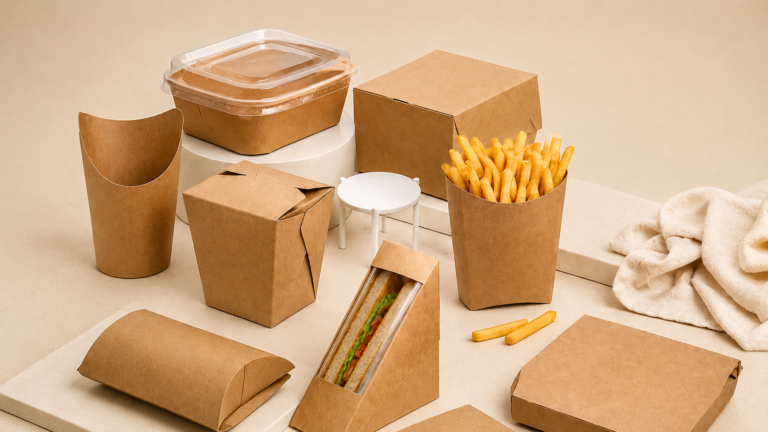
Best Food Packaging Material for Your Cafe Startup
Best Food Packaging Material for Your Cafe Startup
Kraft, Bagasse, Plastic, Corrugated & SBS
Your Menu Decides Your Packaging
The Indian Market Reality: Why Packaging Decisions Matter More Now
▸ Food Packaging Materials – Complete Breakdown
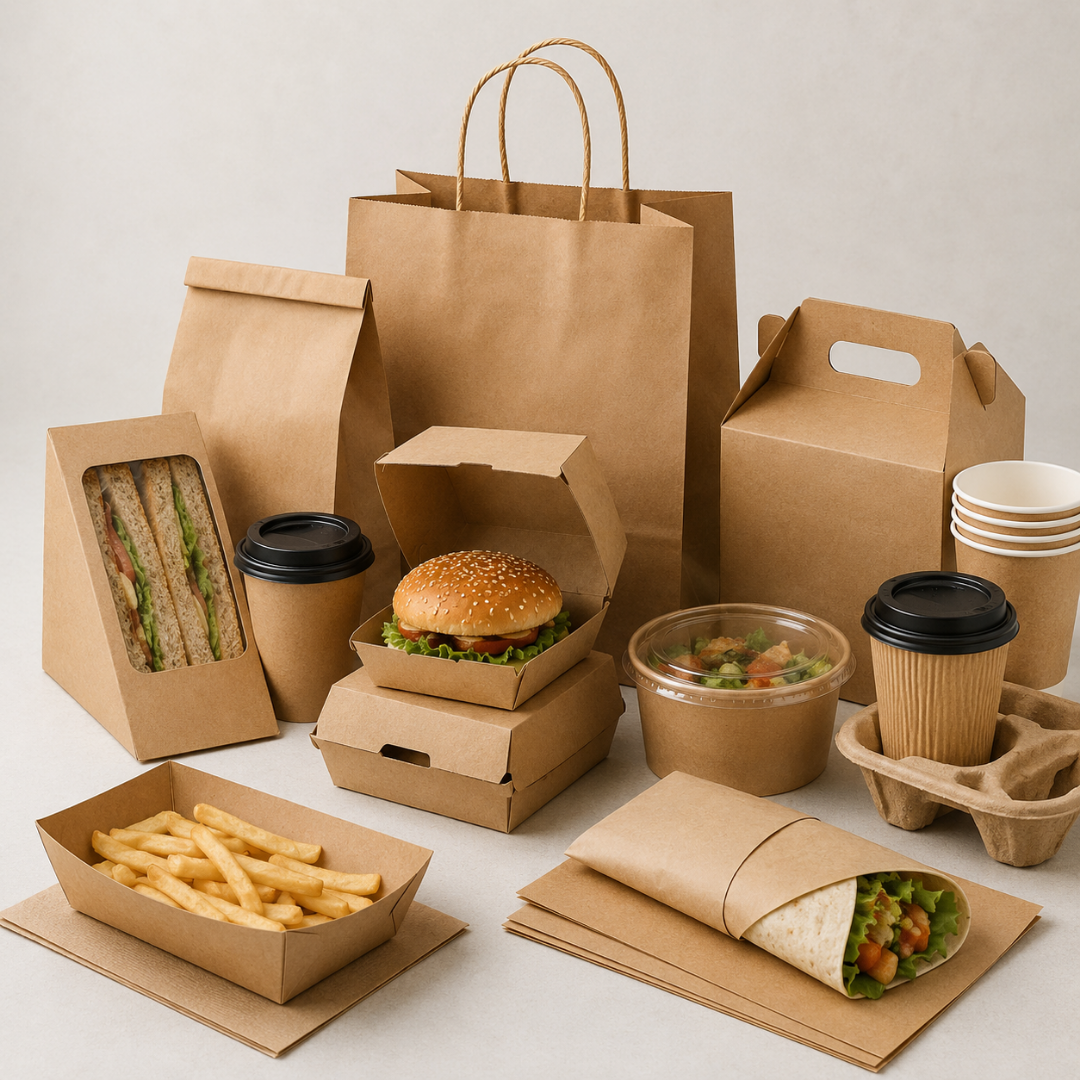
1. Kraft Paper — Premium Cafes and Bakeries
What it is: Kraft paper is a durable and biodegradable packaging material produced through the kraft process (sulfate pulping). Its natural brown hue comes from retained wood lignin. It comes in unbleached (brown), semi-bleached, and bleached (white) variants. The brown version is what most cafes use for that artisan aesthetic. Shop Kraft →
Why it works for cafes: Kraft paper’s natural look has become a popular choice for modern, eco-conscious food brands. Clean kraft boxes are recyclable in most paper streams and are also compostable if uncoated. For oily foods, always use grease-resistant coated kraft. For soups and very wet preparations, kraft without an inner lining will fail, pair it with a bagasse container instead. Kraft is excellent for sandwiches, bakery items, wraps, and carry bags. Producing kraft paper uses less energy and emits fewer greenhouse gases than manufacturing plastic, making it a low-carbon alternative for modern food packaging needs.
Best for: Sandwiches, bakery boxes, takeaway bags, burger wraps, deli paper, coffee-shop carry bags.
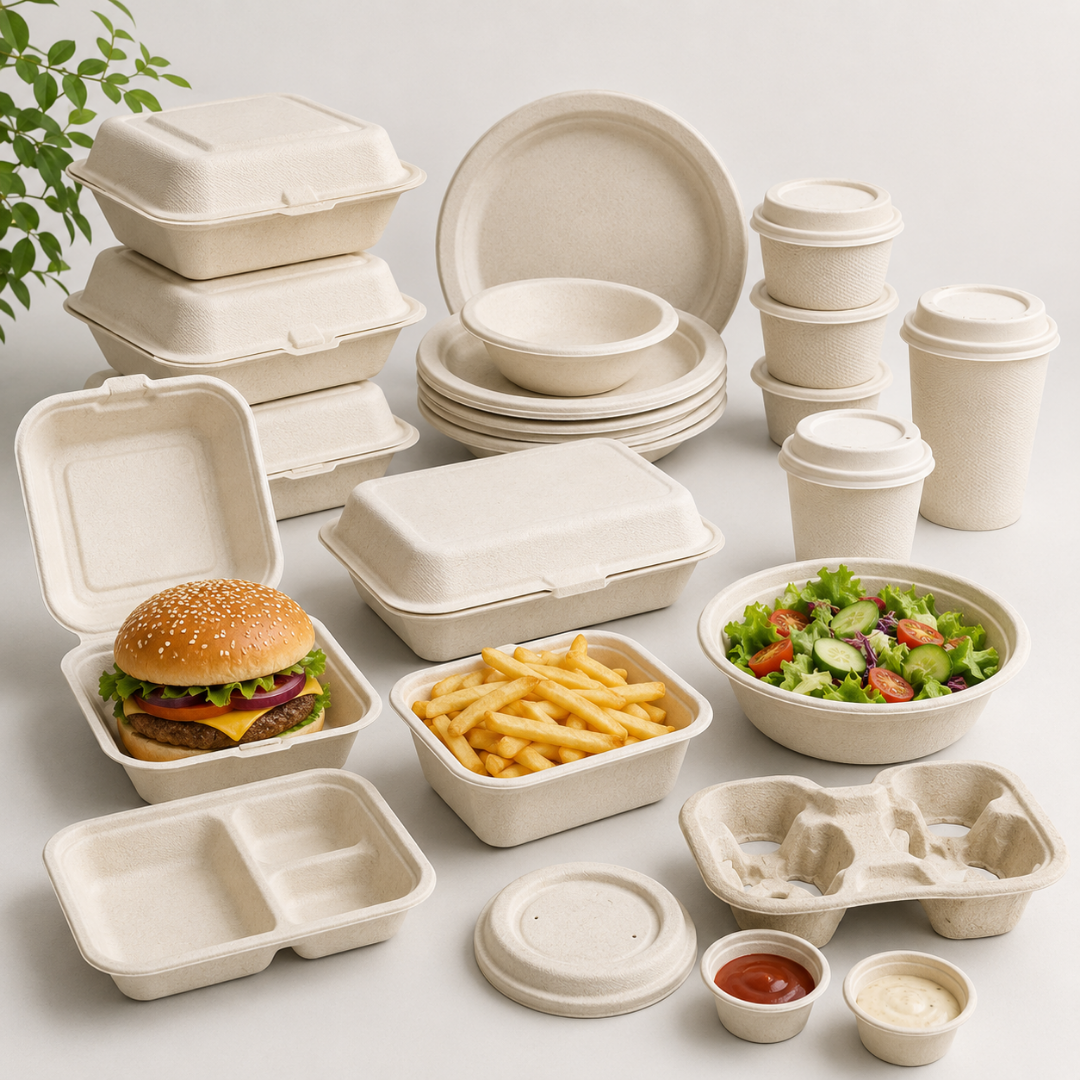
2. Bagasse — For Cloud Kitchens and High-Volume Delivery
What it is: Bagasse is the fibrous residue that remains after sugarcane stalks are crushed to extract their juice. It’s primarily applied in short-lifecycle, single-use products, especially foodservice packaging, where biodegradability, heat resistance, and regulatory compliance are critical. India being a massive sugarcane producer means this material has a strong domestic supply chain — it isn’t an expensive import. Shop Bagasse →
Why it’s the fastest-growing category: Bagasse containers have excellent heat resistance, allowing them to withstand hot liquids and foods without warping or melting. Bagasse products are also microwave and freezer safe, making them convenient for catering purposes. Bagasse naturally resists oil and heat up to 200°F (93°C), making it ideal for everything from curries to burgers. Consumer pull: According to recent surveys, 7 in 10 consumers prefer restaurants using compostable, plastic-free packaging, even if it costs slightly more.
Best for: Biryani boxes, curry bowls, pasta and noodle containers, meal kit deliveries, catering trays, soup bowls.
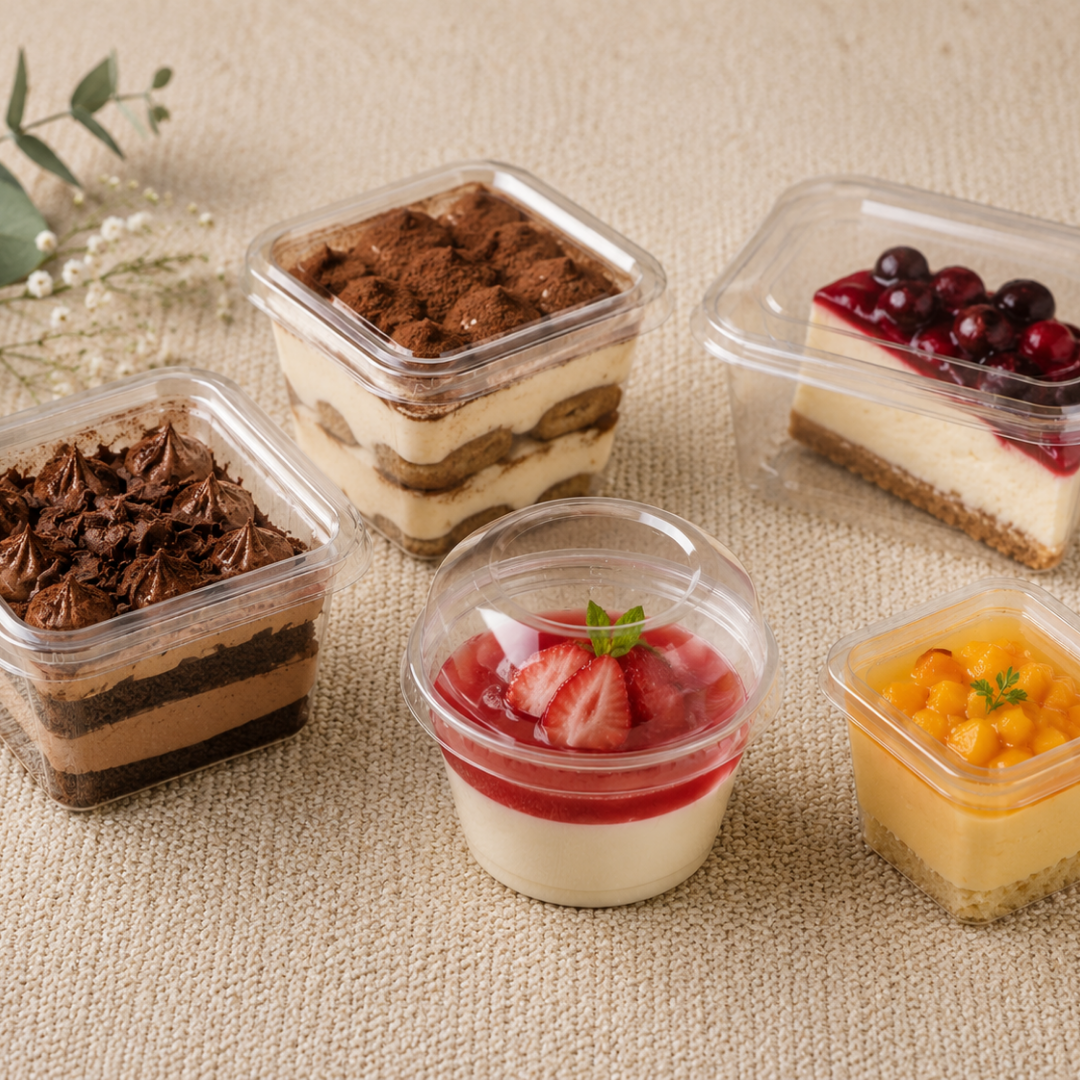
3. Plastic — Where It Still Makes Sense (And Where It Doesn’t)
Let’s be honest about plastic rather than demonizing it. Plastic still holds the overall lead with 55.92% share of India’s food and beverage packaging market in 2025. Plastic genuinely outperforms everything else for transparent dessert packaging (customers want to see the cheesecake), bottled sauces and condiments, and leak-proof containers for liquids. Per unit, food-grade plastic is still one of the lowest-cost options. Plastic range →
FSSAI compliance: FSSAI’s new packaging protocols comprise a migration limit of 60mg/kg or 10mg/dm² and migration limits for specific contaminants in plastic packaging materials. What to avoid completely: Single-use plastic bags under 75 microns (banned), plastic plates and cutlery (banned in multiple states), thermocol containers, and any non-food-grade plastic. Treat plastic as a bridge material — use it where it’s genuinely the best option, and build a switch roadmap for everything else.
Best for: Transparent dessert packaging, bottled sauces and condiments, leak-proof liquid containers.
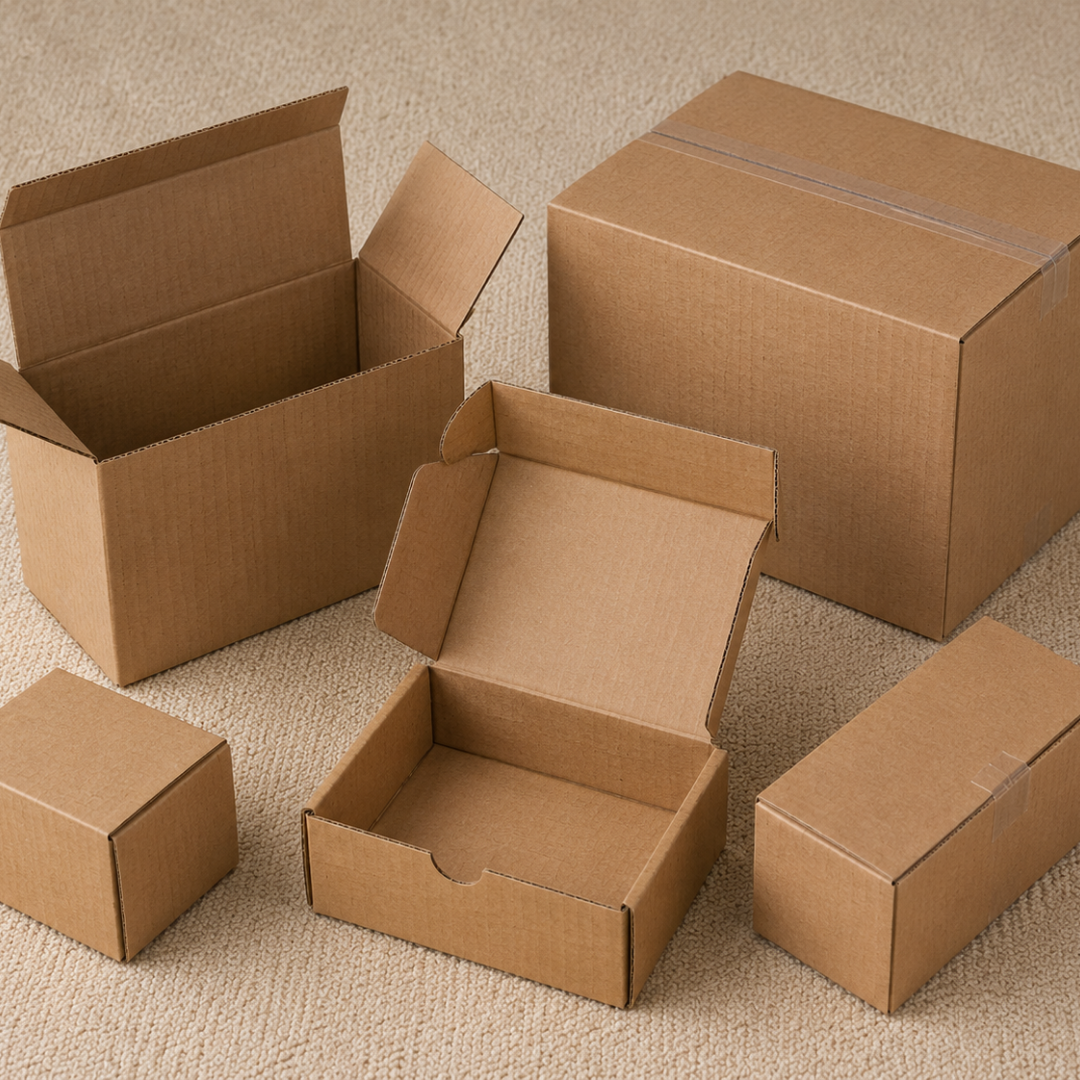
4. Corrugated Boxes — Ply Selection & Performance
Ply selection: the quick guide — A 3-ply box handles lighter, dry goods. 5-ply is better suited for frozen foods, heavy packaged products, or anything travelling through India’s varied logistics conditions. For very heavy industrial food shipments, some manufacturers go up to 7-ply. For cafe operators: 3-ply for pizza boxes, burger boxes, and cupcake carriers; 5-ply for multi-tier cakes, gifting hampers, and heavy mithai boxes. Corrugated options →
The fluted structure of the corrugated box creates an air gap that insulates heat, the board naturally absorbs some steam preventing sogginess from below, the rigidity prevents the pizza from folding in the delivery bag, and the structural strength allows stacking. No other material combines these four properties.
Best for: Pizza boxes (3-ply standard), cakes in transit (5-ply), gifting hampers, meal kit deliveries, bulk catering cartons.
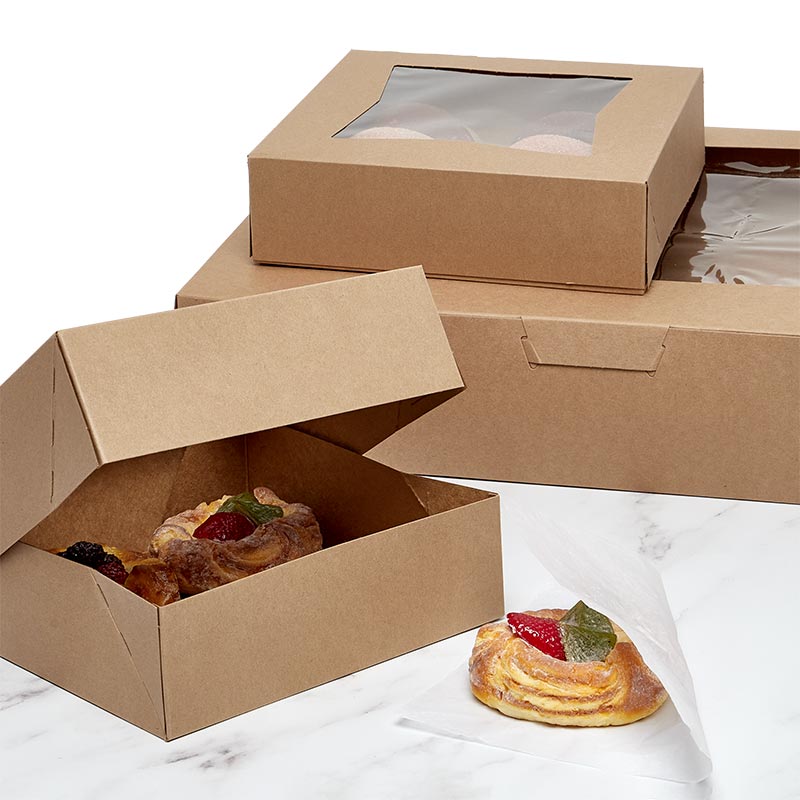
5. SBS Paperboard — For Cakes, Mithai, and Premium Presentation
SBS (Solid Bleached Sulphate) is food-grade paperboard made entirely from virgin wood pulp, bleached to a clean white. It is the only paperboard where you should put a cake, a croissant, or a premium dessert. SBS board is the cleanest option when the inner surface touches food directly. India’s sweets industry, estimated at over Rs 50,000 crore annually, is the single largest consumer of food-grade paperboard. Mithai boxes range from simple duplex board boxes for everyday sales to premium SBS board boxes with gold foil stamping, embossing, and window patches for festival gifting.
Compliance: Paperboard for food contact must comply with FSSAI Packaging Regulations 2018. Key requirements: overall migration maximum 60 mg/kg for plastic-coated paperboard, lead content maximum 1 mg/kg in the paperboard material, and printing inks on the food-contact side must be food-grade.
Best for: Cake boxes, pastry packaging (croissants, tarts, macarons), mithai boxes, premium gifting, festive packaging.
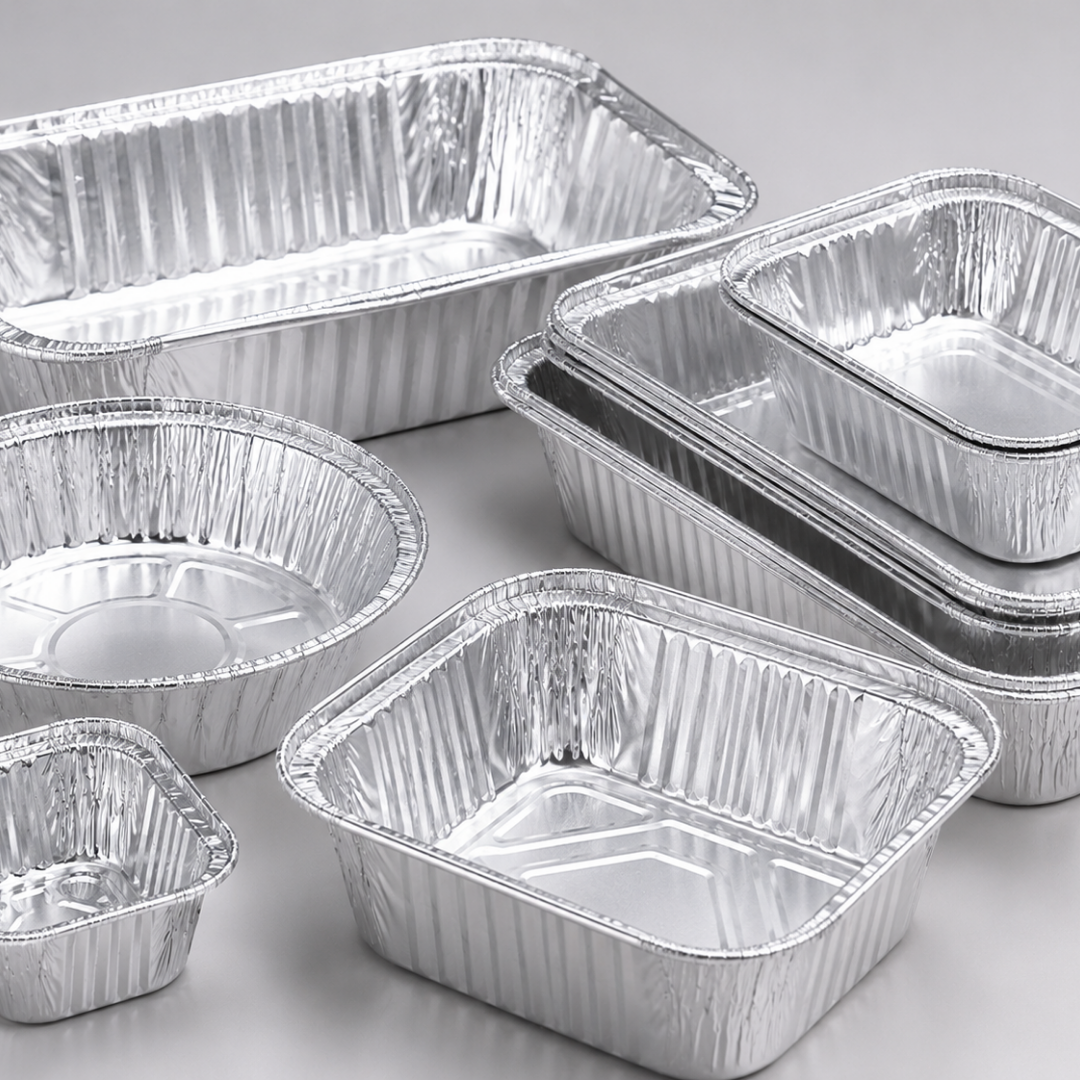
6. Aluminium Foil — The Underrated One
Aluminium Foil is the only single material that simultaneously blocks moisture, oxygen, light, and grease while being heat-stable and oven/grill safe. Aluminium range → Under FSSAI regulations, primary packaging for food items must use foils or paper-based food-grade materials as per IS: 10146 and IS: 10910, providing protection from light, moisture, and microbial contamination. Food-grade aluminium foil is different from industrial foil. Always source from FSSAI-compliant suppliers.
What it isn’t for: Don’t use it as a default wrap for everything. Contaminated foil is rarely recycled in India’s current infrastructure, use it where the functional advantage is real.
Best for: Shawarmas, burritos, and rolls (heat retention + shape); tiffin containers for catering; baking and grilling; foil trays for buffet and event service.
Simple Rules for a New Cafe (Start Here)
Similar Posts
Is Kraft Paper Good for Food Packaging? Everything a Food Business Owner Must Know
Food Packaging / Kraft Paper Guide Is Kraft Paper Good for Food Packaging? Everything a Food Business Owner Must Know A practical guide for restaurants, cloud kitchens, bakeries, QSRs, hotels, cafes, and food brands comparing kraft paper safety, GSM, coatings, applications, cost, and buying decisions. Focus: kraft paper food packaging For restaurants, bakeries, QSRs &…