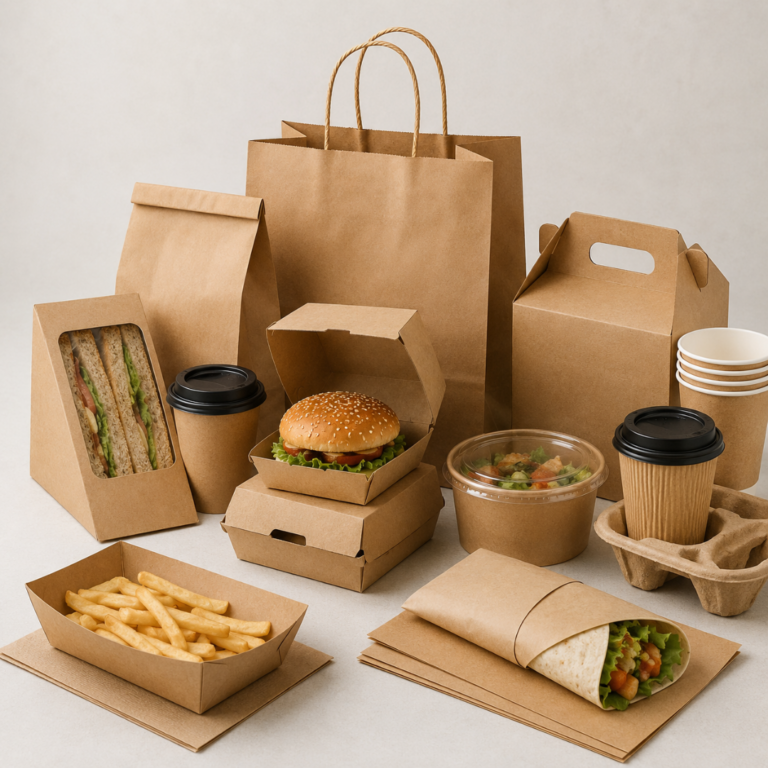
Is Kraft Paper Good for Food Packaging? Everything a Food Business Owner Must Know
Is Kraft Paper Good for Food Packaging? Everything a Food Business Owner Must Know
A practical guide for restaurants, cloud kitchens, bakeries, QSRs, hotels, cafes, and food brands comparing kraft paper safety, GSM, coatings, applications, cost, and buying decisions.
Kraft paper is everywhere in food packaging today, but choosing the wrong grade, GSM, or coating can still create leakage, grease marks, weak delivery performance, or compliance issues.
If you run a restaurant, cloud kitchen, bakery, QSR, hotel, cafe, catering business, or food brand in India, you have probably considered kraft paper packaging at some point. You see it in burger wraps, takeaway bags, bakery boxes, biryani packaging, deli papers, fry cones, and custom printed food packaging.
The real question is not just whether kraft paper looks good. A food business owner must know whether it is safe for food contact, whether it can handle oil and moisture, what GSM should be selected, which coating is required, and whether kraft paper is actually sustainable or only a branding trend.
This guide explains how kraft paper works, where it performs well, where it fails, and how to choose the right kraft paper packaging for real foodservice operations.
Is Kraft Paper Good for Food Packaging?
Yes, kraft paper is a strong and practical choice for food packaging when the correct food-grade material, GSM, and coating are selected for the food type.
Plain kraft paper works well for dry foods, bakery items, sandwiches, bread, dry snacks, and lightweight takeaway use. For oily, hot, wet, or saucy food, kraft paper needs a grease-resistant or moisture-resistant coating such as PE, PLA, wax, or a water-based barrier coating.
- Best for dry foodUncoated or lightly coated food-grade kraft paper.
- Best for oily foodGrease-resistant coated kraft paper or deli paper.
- Best for hot/wet foodProperly coated containers, bowls, cups, or paperboard packaging.
What Is Kraft Paper, and Where Does It Come From?
The word kraft comes from the German word for strength. That name makes sense because kraft paper is known for its tear resistance, toughness, and ability to hold shape under pressure.
Kraft paper is made through the kraft process, also known as the sulfate pulping process. In this process, wood chips are treated to separate cellulose fibers from lignin and other components. The long cellulose fibers help give kraft paper its strength.
In simple food business terms, kraft paper is popular because it can carry food, survive handling, support printing, and create a natural-looking brand presentation. That is why kraft packaging is used across burger outlets, bakeries, cloud kitchens, premium takeaway counters, cafes, and retail food brands.
Kraft paper is not just brown paper. It is a strong paper-based packaging material, and its performance depends on grade, GSM, coating, and food-contact suitability.
Types of Kraft Paper Used in Food Packaging
| Type | What It Means | Best Food Packaging Use |
|---|---|---|
| Unbleached Natural Kraft | Classic brown kraft paper with a natural, rustic look and strong durability. | Burger wraps, paper bags, sandwich wraps, dry snack packaging, bakery packaging, and takeaway presentation. |
| Bleached White Kraft | Kraft paper treated to achieve a cleaner white appearance for premium presentation. | Bakery boxes, confectionery packaging, branded food boxes, premium wraps, and high-visibility printing. |
| MG Kraft | Machine glazed kraft paper with a smoother finish on one side for better print and presentation. | Sandwich wrappers, bakery pouches, snack packaging, tea pouches, sachets, and custom printed packaging. |
| Coated Kraft | Kraft paper with a functional barrier coating for grease, moisture, or liquid resistance. | Coffee cups, soup containers, fry boxes, burger wraps, coated bowls, and oily food packaging. |
| Recycled Kraft | Kraft paper made using recycled fibers or non-virgin material. | Outer packaging, carry bags, and non-direct-food-contact use where permitted by local regulations. |
| Sack Kraft | Heavy-duty kraft paper used for stronger industrial and bulk packaging formats. | Bulk dry goods like flour, rice, sugar, dry ingredients, and heavy-duty food supply packaging. |
Is Kraft Paper Actually Safe for Food?
Kraft paper can be safe for food packaging, but only when it is food-grade and suitable for the specific food contact application. A food business should not assume that every brown paper, recycled paper, or printed kraft paper is safe for direct food contact.
Food packaging materials must be designed so that unsafe substances do not migrate into food. The U.S. FDA food-contact substance guidance explains that packaging components that come into contact with food are regulated as food-contact substances.
In India, the FSSAI Food Safety and Standards Packaging Regulations specify requirements for packaging materials used with food. The regulations also prohibit unsafe practices such as using newspaper or similar printed materials for wrapping, covering, serving, or absorbing oil from food.
For direct food contact, ask your supplier for food-grade confirmation, material specification, coating details, migration compliance where applicable, and whether the paper is virgin grade when required for your use case.
Where Kraft Paper Works Best in Food Businesses
Kraft paper is useful across many food formats, but the packaging must match the food type. Dry foods, bakery items, and light snacks need different kraft specifications than hot curries, oily fries, or saucy meals.
Use kraft wraps, burger boxes, fry cones, sandwich bags, tray liners, and takeaway bags for fast service and natural food presentation.
Use kraft cake boxes, bread bags, cookie pouches, pastry boxes, and confectionery packaging for a clean and premium bakery look.
Use stronger kraft bags, coated paper containers, delivery boxes, and spill-resistant packaging for stacking, rider handling, and delivery movement.
Use premium bleached kraft, MG kraft, custom printed kraft bags, meal boxes, event packaging, and in-room dining packaging.
Use kraft coffee cups, sleeves, pastry bags, sandwich wraps, takeaway boxes, and custom branded kraft paper packaging.
Use kraft pouches, sacks, wraps, and bags for dry ingredients, bakery ingredients, grains, sugar, flour, and retail food items.
What GSM Should You Use for Kraft Food Packaging?
GSM means grams per square meter. It tells you how heavy and thick the paper is. Higher GSM usually gives better strength and structure, but it does not automatically make packaging greaseproof or waterproof.
| GSM Range | Best For | Business Use Case |
|---|---|---|
| 50 to 60 GSM | Light wraps, dry snacks, sandwich papers, and light food liners. | Cafes, bakeries, sandwich counters, and snack brands. |
| 70 to 90 GSM | Burger wraps, fry packs, food pouches, sandwich bags, and oily food wraps with coating. | QSRs, burger outlets, cloud kitchens, and takeaway counters. |
| 100 to 120 GSM | Heavier paper bags, combo meal packaging, delivery support, and stronger wraps. | Delivery kitchens, restaurants, caterers, and food retail brands. |
| 140 to 180 GSM | Rigid bakery boxes, cake boxes, food trays, folding cartons, and premium printed packaging. | Bakeries, premium cafes, dessert brands, and branded food packaging. |
Do not select GSM only by touch or appearance. Test samples with your actual food, delivery time, stacking method, oil level, and serving temperature.
When Does Kraft Paper Need a Coating?
Plain kraft paper is strong, but it is not automatically greaseproof, leakproof, or moistureproof. Oily food, fried food, curries, sauces, gravies, hot beverages, soups, and moist bakery items usually need a barrier coating.
Creates a strong moisture and grease barrier for cups, bowls, containers, and oily food packaging. Recycling may be more difficult depending on the paper stream.
A bio-based coating used for compostable-style packaging where industrial composting infrastructure is available.
A newer barrier option that can provide grease and moisture resistance while supporting a better sustainability profile than traditional plastic coating.
Useful for deli paper, sandwich wraps, and moisture-resistant wraps, but may not be suitable for normal paper recycling streams.
Higher GSM gives strength, but coating gives barrier protection. For oily or wet food, you need the right coating, not just thicker kraft paper.
Cost Considerations for Kraft Paper Packaging
Kraft paper is generally cost-effective for food businesses, but the final price depends on GSM, coating, printing, box structure, order quantity, and whether the packaging is standard or customised.
Basic uncoated kraft is usually more economical, while high-GSM board, barrier coatings, premium white kraft, MG kraft, and custom printing increase the cost. The smartest approach is to match packaging specifications to actual food needs instead of overpaying for features that do not improve performance.
Food businesses should also consider long-term supply stability. Packaging costs can change with paper pulp prices, coating material costs, print complexity, and supplier availability. Bulk buying, planned procurement, and vendor comparison can help reduce last-minute cost pressure.
Use premium kraft where customers see the packaging, and use performance-focused kraft where delivery strength, grease resistance, or stacking safety matters most.
A Quick Checklist Before You Buy Kraft Paper Packaging
Confirm that the kraft paper is suitable for direct food contact where your food touches the packaging.
Choose GSM based on food weight, delivery distance, stacking pressure, and packaging format.
Use grease-resistant or moisture-resistant coating for oily, wet, saucy, or hot food.
Ask for food-grade confirmation, material specs, coating details, and test data where relevant.
Test the packaging with your actual food, temperature, oil level, holding time, and delivery conditions.
Make sure printed surfaces do not directly touch food unless the ink and structure are suitable for that use.
Check whether the product is recyclable, compostable, FSC-certified, PEFC-certified, or simply marketed as eco-friendly.
Balance price advantage with storage space, packaging shelf life, and changing menu requirements.
Never approve kraft packaging only by photo. Always check sample performance with your real menu before placing a bulk order.
Kraft Paper Packaging Products for Food Businesses
Looking for premium kraft paper? Order any of the products below directly from our website using the links provided for a quick and hassle-free shopping experience.
Useful for restaurants, cafes, bakeries, and cloud kitchens that need takeaway, delivery, and retail food carry packaging.
View ProductsBest for burgers, sandwiches, sliders, loaded buns, and QSR takeaway menus that need sturdy food presentation.
View ProductsUseful for rice bowls, salads, noodles, pasta, snacks, and delivery-friendly food packaging formats.
View ProductsBest for bakeries, dessert brands, cake shops, pastry counters, and premium food gifting packaging.
View ProductsUseful for takeaway meals, combo meals, snacks, bakery items, and portioned food packaging.
View ProductsConclusion
Kraft paper is one of the most useful packaging materials for modern food businesses, but it only performs well when it is selected correctly. The same kraft paper that works for dry bakery items may fail badly with oily fries, hot curries, soups, gravies, or long-distance delivery.
The three most important decisions are simple: choose the right kraft type, choose the right GSM, and choose the right coating. Once those decisions are correct, kraft paper packaging can protect food, improve presentation, support branding, and work across restaurants, bakeries, cloud kitchens, QSRs, hotels, cafes, and catering operations.
If procurement feels confusing, sourcing through Prockured helps food businesses compare packaging options, explore customisation, and source foodservice packaging from one place.
Frequently Asked Questions
Yes, food-grade kraft paper can be safe for direct food contact. Always confirm that the paper is food-grade, suitable for your food type, and supported by supplier documentation.
Plain uncoated kraft paper is not suitable for hot, wet, oily, or liquid-heavy food. For curries, soups, gravies, and hot meals, use properly coated kraft containers, bowls, or paperboard packaging.
Use 50 to 60 GSM for light dry wraps, 70 to 90 GSM for burger wraps and snack packaging, 100 to 120 GSM for heavier takeaway bags, and 140 to 180 GSM for rigid bakery boxes and food cartons.
For direct food contact, be careful with recycled kraft paper. Food businesses should verify FSSAI compliance, virgin-grade requirements where applicable, and whether the material is approved for the exact intended use.
Do not assume kraft paper is microwave safe. Some specially designed food-grade paper products may be suitable, but uncoated or unknown kraft paper can be unsafe. Always check the product specification before microwave use.
Grease soaks through because plain kraft paper has no strong oil barrier. Higher GSM gives more strength, but it does not stop oil. For greasy food, use grease-resistant coated kraft paper.
Uncoated kraft paper is generally more recyclable and biodegradable than many plastic packaging formats. However, coatings, inks, lamination, and food contamination can affect recyclability or compostability, so always check the exact product specification.
Yes. Kraft paper packaging can be custom printed. MG kraft and white kraft often give cleaner print results, while brown kraft gives a natural rustic brand look.
Brown kraft is usually unbleached and gives a natural look. White kraft is treated for a cleaner white appearance and is often preferred for premium packaging, bakery boxes, and sharper printed branding.
Choose the Right Kraft Paper Packaging Before Your Food Goes Out for Delivery
From kraft paper bags, burger boxes, paper bowls, cake boxes, custom printed packaging, takeaway containers, and foodservice disposables, Prockured helps restaurants, bakeries, cafes, QSRs, hotels, caterers, and cloud kitchens source packaging built for real food operations.
Explore Kraft Packaging