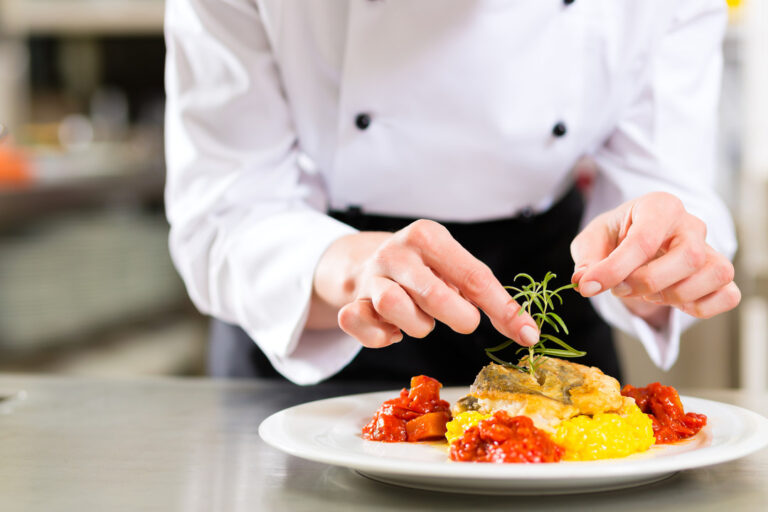
How to Train Cafe Staff for Consistent Service Every Single Day
How to Train Cafe Staff for Consistent Service Every Single Day
Is your cafe’s quality changing depending on who’s working? Learn how to build a cafe staff training system with SOPs, station ownership, mock service, and weekly feedback loops that keep your service consistent every day.
A practical guide for cafe owners who want consistent service, repeatable operations, and a team that performs well even when the owner is not in the room.
You have seen it happen. One day the service is smooth, guests are happy, the coffee is coming out perfectly. The next day, a different set of staff shows up and suddenly the espresso tastes off, the greetings feel cold, and two tables sit unattended for ten minutes.
Nothing changed in your menu. Nothing changed in your interiors. The only thing that changed was who was working.
If this sounds familiar, you are not alone. This is one of the most common challenges cafe owners in India face, especially as they start to scale. And the instinct is almost always to blame the team.
But here is the truth: this is not a hiring problem. This is a training problem.
When your cafe runs differently depending on who shows up, it means your cafe is built around people and not around systems. Great training fixes this. It takes the knowledge that lives only in your head and turns it into a repeatable experience your entire team can deliver, whether you are present or not.
This guide will walk you through exactly how to build that system.
What You’ll Learn
- Why inconsistent cafe service is usually a training problem
- How to assign clear station ownership
- How to create SOPs for your cafe team
- Why mock service improves real guest experience
- How weekly feedback loops improve staff performance
- How to start building your training system in four weeks
Why Consistent Cafe Staff Training Actually Matters
Before getting into the how, it is worth understanding what is actually at stake.
Guests are emotional. They do not just come to your cafe for a cappuccino. They come for a feeling. The warmth of being greeted. The comfort of knowing their order will be right. The sense that someone is paying attention. When that feeling changes based on who is behind the counter, guests notice. They may not say anything. They will simply stop returning.
In the hospitality industry, well-defined training procedures ensure that every team member delivers services according to brand standards from day one. A trained team is the strongest asset of any hospitality business, and continuous training keeps staff aligned with changing guest expectations. (County Hotels)
There is also a very real financial cost to poor training. The hospitality industry has one of the highest employee turnover rates globally, sitting at around 79 percent annually, and 44 percent of restaurant and cafe employees say that a lack of recognition and clarity in their role is what drives them to quit. (Homebase) Every time a trained staff member leaves because they felt confused or undervalued, you spend time and money rehiring and retraining from scratch.
A proper cafe staff training program is not just about service quality. It is about building a team that stays, grows, and genuinely cares about the experience they deliver.
Station Ownership: Give Every Person a Clear Role
The first and most foundational step in any cafe training program is assigning clear station ownership.
Most small cafes operate on what feels like a flexible system. Everyone does a little of everything. In reality, this creates invisible chaos. When no one is specifically responsible for something, no one truly owns it. And when things go wrong, no one knows who dropped the ball.
Station ownership changes that entirely.
Your barista owns the coffee bar. Every espresso shot, every milk texture, every cup presentation is their responsibility. Your kitchen staff owns food preparation, quality, and plating. Your floor staff owns the guest experience from the moment a guest walks in to the moment they walk out.
Effective cafe and restaurant training must emphasize how each role, from the host to the server to the kitchen, contributes to the fluidity of service. Each person’s contribution matters and must be clearly defined. (Manifestly)
When you give your staff station ownership, you give them something most cafe employees in India never receive: a sense of pride and accountability. They stop thinking like someone completing a shift and start thinking like someone responsible for an outcome.
How to implement this:
Start by listing every station in your cafe. Coffee bar, hot kitchen, prep station, floor service, billing counter, restocking. For each station, assign one primary owner per shift. Create a simple one-page document per station listing what that person is responsible for from the time they arrive to the time they leave. Review these roles every few months as your team evolves.
Build Your SOPs: If It Is Not Written, It Does Not Exist
If It Is Not Written, It Does Not Exist
This is the step most cafe owners skip, and it is also the step that makes the biggest difference.
SOPs, or Standard Operating Procedures, are written instructions for every recurring task in your cafe. They do not need to be formal or complicated. But they need to exist outside of your brain, because you cannot be everywhere and your memory is not a training system.
Restaurant and cafe SOPs cover all aspects of operations, from food safety and quality practices to customer service, staff hygiene, and premise cleanliness. Documented processes shorten training time, lower onboarding costs, and provide performance benchmarks that make it easier to identify and correct service gaps. (GoAudits)
Your SOPs should cover three broad areas.
Kitchen and Food SOPs How long does each dish take to prepare? What is the exact plating standard for every menu item? How is food stored before service? What is the cleaning routine? These things must be written so that every kitchen staff member, experienced or new, follows the same process every single time.
Service SOPs How do staff greet a guest? What exact words are used? How quickly should a table be attended after a guest sits? How is a complaint handled when a guest is unhappy with their order?
Detail step-by-step instructions for core tasks such as food preparation, order taking, customer interactions, and hygiene practices. Provide guidelines on greeting customers, handling complaints, upselling menu items, and creating a positive dining experience. (CloudKitchens)
Opening and Closing SOPs What happens in the first thirty minutes before your cafe opens? Who checks the equipment, the stock, the cleanliness? What is the closing checklist? These routines, when done consistently, set the tone for every single shift.
One important note: do not write your SOPs alone sitting at your desk. The best SOPs are written with, not just for, your team. Shadow staff, conduct walkthroughs, and ask what slows them down or causes confusion. (KNOW) You will discover that what you think happens and what actually happens are often two very different things.
Once your SOPs are written, print them, laminate them, and keep them visible at each station. A document that lives only on your laptop will never be read.
A small but important note for cafe owners: your staff can only be consistent if your equipment is consistent too. A barista trained on a specific grinder setting will struggle if the equipment keeps changing or breaking down. Reliable kitchen equipment, refrigeration, and crockery are part of your consistency system. Prockured is a B2B hospitality procurement platform that helps cafes and HORECA businesses source kitchen equipment, tableware, and refrigeration without the hassle of dealing with multiple vendors.
Need Reliable Equipment for a Consistent Cafe Setup?
Prockured helps cafes and HORECA businesses source kitchen equipment, tableware, refrigeration, and procurement essentials without dealing with multiple vendors.
Talk to ProckuredRun a Mock Service Before Real Guests Walk In
This is one of the most underused tools in cafe staff training and one of the most powerful.
A mock service is a full rehearsal of your cafe’s operations before actual customers are involved. Call in friends, family, or trusted regulars. Ask them to come in, sit down, and behave like real guests. Your staff takes real orders, makes real drinks, serves real food, generates real bills.
You stand back and observe everything.
Hands-on learning is far more effective than simply reading a training manual. Simulations, role-playing, and mentoring with experienced employees build the kind of practical confidence that shows up in real service.
After the mock service, gather the entire team and go through every gap you noticed. Was the greeting warm and immediate? Did the barista maintain eye contact or stare at the machine? Was the complaint handled with empathy or defensiveness? Did the floor staff forget to check back on a table?
Running role-playing scenarios where staff practice responding to common complaints builds muscle memory for handling real-life situations with empathy and professionalism. (MAJC AI)
Fix every gap before your actual opening or before your new hire starts serving real guests. The mock service turns your training from theory into lived experience, and that is a gap no manual can fully bridge on its own.
The Weekly Feedback Loop: The Training Habit Most Cafes Skip
Training is not a one-time event that happens during onboarding. It is an ongoing culture.
The cafes that maintain consistently great service are not the ones with the most complicated training manuals. They are the ones that check in regularly, catch problems early, and make their staff feel genuinely heard.
Here is how to build a simple weekly feedback loop:
Hold a short team huddle at the start or end of each week. Keep it under fifteen minutes. Ask two questions: what worked this week and what did not. Write down the answers. Then actually act on what you hear before the next week begins.
When managers encourage a feedback-friendly culture and open communication channels, they are directly encouraging employee retention. Employees who feel their concerns are heard and addressed are far more likely to remain committed to their workplace. (HR Cloud)
When your staff see that their input leads to real change, something shifts. They stop being people completing a shift and start becoming people invested in the experience they are delivering. That sense of ownership is something no salary alone can buy.
Research in hospitality management strongly indicates that coaching and mentoring are the most preferred forms of training among staff, and that increasing investment in ongoing staff training directly and positively influences employee retention. (Taylor and Francis)
Monthly, do a deeper review. Look at your Google reviews, your repeat customer rate, your most common complaints. Are there patterns? Is the same mistake coming up repeatedly? That is a signal to revisit the SOP or retrain for that specific station.
Implement recognition for outstanding contributions to celebrate good work and motivate continued excellence. Regularly evaluate the effectiveness of your training through performance observation and feedback from staff on what can be improved. (Meez)
Where to Start If You Are Building This From Scratch
If reading this made you realise you need to build everything from scratch, do not feel overwhelmed. Do not try to document everything at once. You will get paralysed and nothing will get done.
Use this four-week starter plan instead:
Write your opening and closing checklists. These are the easiest to start with and have an immediate impact on every shift.
Write your guest greeting SOP and your complaint handling SOP. These two documents alone will visibly improve your guest experience within days.
Write kitchen preparation SOPs for your top five selling menu items. Preparation time, plating standard, portioning, temperature.
Write station responsibility documents for every role in your cafe.
At the end of one month, you will have the foundation of a real training manual. It will not be perfect. It will evolve as your cafe grows. But it will exist, and that already puts you ahead of the majority of cafes in India that are still running entirely on word of mouth and improvisation.
Training is not a one-time event. Schedule refresher sessions, launch updates when your menu changes, and keep your team aligned as your operations evolve.
Build Systems, Not Just a Team
The difference between a cafe that thrives and a cafe that survives on the owner’s constant presence is not talent. It is systems.
When your cafe staff training is built on clear station ownership, documented SOPs, hands-on mock services, and a consistent weekly feedback loop, your cafe stops depending on who shows up and starts consistently showing up for every guest, every day.
When your SOPs are clear, trained, and owned by the right people, your cafe starts to function without your constant supervision. That is the point where you stop being an operator putting out fires and start becoming an owner building something that lasts.
Your guests deserve a consistent experience. Your staff deserves the clarity to deliver one. And you deserve a cafe that runs even when you are not in the room.
Start with one step this week. Write one checklist. Define one station role. Run one mock service. The system builds from there, one document, one huddle, one well-trained team member at a time.